Intro
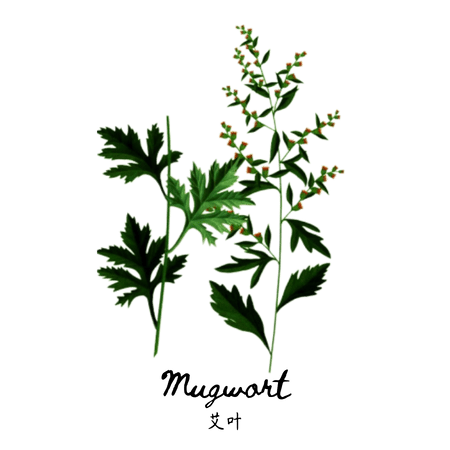
Mugwort (Ai Ye, 艾叶) is one of the key Chinese herbal plants we return to again and again in our blends – a soft, herbal, slightly smoky note that suggests mountains, clean air and quiet rituals at home. Whether you meet it in a sachet, a festival decoration or a line in a classic text on traditional Chinese medicine, this page is here to gently introduce what mugwort is and why it matters in Chinese tradition.
At a Glance
- Botanical name: Artemisia argyi
- English name: Chinese mugwort
- Chinese name: 艾草 / 艾叶 (Ai cao / Ai ye)
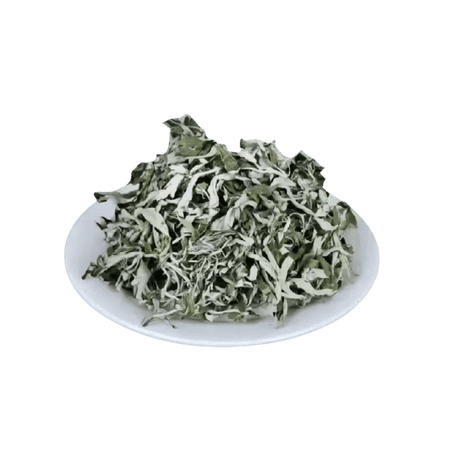
- Plant part used here: Dried leaves
- Aroma: Herbal, warm, slightly bitter, with a gentle smoky note
- Role in our blends: Adds a grounded, “herbal spa” feeling and a sense of warmth and protection
What Is Mugwort?
Mugwort is a hardy, aromatic herb in the daisy family. It has soft, silvery-green leaves and grows along riverbanks, fields and gentle slopes across East Asia.
When the leaves are dried and gently rubbed, they release a warm, slightly bitter scent. In many homes, this smell is associated with cleanliness, warmth and the feeling of early summer.
Name & Origins
The English name mugwort comes from Old English forms such as mugwort or mugcwyrt. Most scholars think it originally meant “midge-wort” – a herb used to help keep away tiny biting insects. The element wort is an old word for “herb”.
In Chinese, 艾 (ài) is the traditional name for this plant. The character combines the grass radical with a component that historically carried the idea of “cutting off” or “bringing to an end”, which echoes its long association in folk culture with burning away cold, illness and inauspicious influences.
Why We Use Mugwort in Our Blends
In our sachets and other blends, we use mugwort not as a medicine, but as a way to bring a quiet, herbal atmosphere into everyday spaces.
Its dry, herbal scent adds a calming, grounded base note that is very different from sweet floral fragrances. It suggests mountains, clean air and traditional herbal baths, and it pairs well with many other herbs and flowers by adding subtle depth and a hint of “smoky warmth”.
You can think of it as a tiny piece of mountain air, quietly tucked into a drawer, suitcase or bedside.
Mugwort in Chinese Tradition
In Chinese folk culture, mugwort is much more than “just a plant”.
During the Dragon Boat Festival, families traditionally hang bundles of mugwort on doors or windows. It is believed to help keep away bad luck and unclean influences, and to protect the household.
Dried mugwort has also been used in baths and steam as a symbol of cleansing and renewal, especially in the context of caring for the body after cold, damp weather.
Because of these customs, mugwort is often linked with ideas of protection, warmth and gentle care for the body, even when it is simply present as a scent.
Traditional Chinese Medicine Perspective
(Traditional theory, for educational description only)
In traditional Chinese medicine (TCM), mugwort leaves (Ai Ye, 艾叶) are described as:
- Nature: warm
- Flavor: bitter and pungent
- Traditional functions (in TCM theory):
warms the channels, “supports yang”, and is regarded as helping to move and “unblock” the flow in the meridians. Dried mugwort is often processed into moxa for use from outside the body.
What is moxibustion?
In TCM practice, dried mugwort is commonly processed into “moxa” and gently burned near the skin in a therapy known as moxibustion. The slow, steady heat is applied to specific points on the body and, within TCM theory, is traditionally believed to warm the channels and disperse “cold” in the meridians. In modern settings, moxibustion is usually carried out by trained practitioners, using different forms such as moxa sticks or small moxa cones depending on the clinical approach.
Historically, mugwort appears in classic TCM texts, in internal formulas and in moxibustion, always within the framework of traditional theory and professional guidance.
Our sachets are inspired by this long tradition, but they do not provide moxibustion and are not intended to be used as any form of medical treatment.
How to Enjoy Your Herbal Sachet
You can place an herbal sachet containing mugwort in a drawer, wardrobe, luggage, near your desk, or by the bedside to gently scent a small personal space.
Give it a gentle squeeze from time to time to refresh the aroma, and avoid placing it directly on very wet or very hot surfaces.
This product is for external use only – do not open the sachet, eat the contents, or brew them as a drink.
Safety & Disclaimer
Some people may be sensitive to strong herbal scents. If you feel discomfort, please move the sachet to a more ventilated area or discontinue use.
Keep the sachet out of reach of small children and pets, as the contents are not food or toys.
This sachet and the information on this page are for lifestyle and educational purposes only.
Our products are not medicines and are not intended to diagnose, treat, cure or prevent any disease.
If you are pregnant, have allergies, or live with any medical condition, please follow the advice of a qualified health professional before using herbal products in other forms such as teas, supplements or moxibustion.