
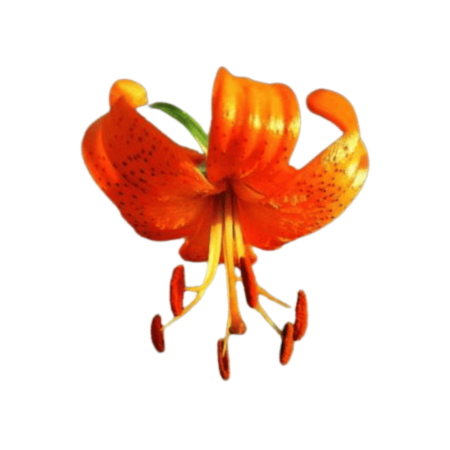
The soul ingredient behind our Lily Pagoda Black Tea.
This is not the kind of lily you find in a flower shop. It comes from the high-altitude loess plateau of Northwest China (about 1,800–2,500 m) and grows slowly in a dramatic climate. After years of steady accumulation, it produces orange-toned blossoms that are valued in the Eastern “food-as-medicine” tradition—not just to admire, but to brew and enjoy as part of tea culture.
In the West, “lily” often means fragrant ornamental cut flowers. But in Lanzhou, Gansu, there is a completely different lily: its flowers aren’t meant for vases—they are dried and used as a brewable, edible floral ingredient that brings a calm, gentle sweetness to tea.
This is the Lanzhou edible lily, protected as a China Geographical Indication (GI) product. In this post, we’ll explore its origin, aroma, cultural context—and why it became a key ingredient in our Lily Pagoda Black Tea.
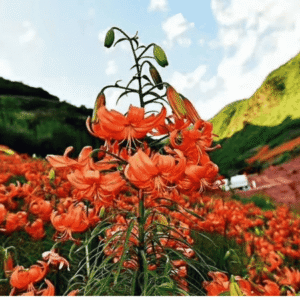
01 Rethinking Lily: A Brewable, Edible Flower (Not the Florist Kind)
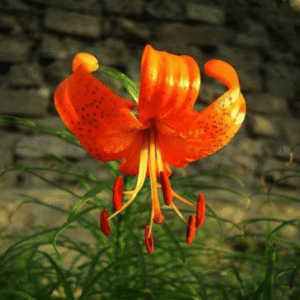
First, an essential distinction: Lanzhou lily is an edible lily, not an ornamental lily.
Its botanical name is Lilium davidii var. willmottiae. Unlike many florist lilies (such as Oriental lilies) that can be intensely perfumed and sometimes irritating to sensitive noses, Lanzhou lily has long been cultivated primarily for its sweet, edible bulbs. Its flowers are also used as a food-grade floral ingredient and have a long history of being brewed and enjoyed.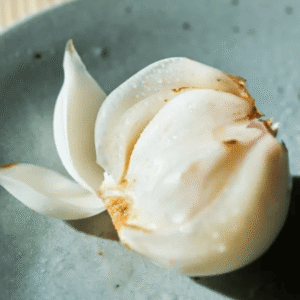
Why that matters:
- A different “ingredient logic”: This lily is grown with edible use in mind—not solely for display value.
- A completely different aroma: The fragrance is light, refined, and naturally sweet, without the overpowering “perfume” character people often associate with ornamental lilies.
In short: it comes from a food-grade growing tradition, not a greenhouse cut-flower system.
02 From the Loess Plateau: Terroir That Shapes Purity and Aroma
The unique character of Lanzhou lily flowers is deeply rooted in their origin—the Lanzhou region of Gansu, China, with its distinctive terroir.
- High altitude: Typically 1,800–2,500 m, with crisp air and strong sunlight.
- Loess-rich soil: Deep loess layers, good drainage, mineral presence.
- Large day–night temperature swings: Helps aromatic compounds develop more distinctly.
- A long growing cycle: The plant often needs years of nutrient accumulation (commonly in the 6–9 year range) before it reaches a more stable flowering stage.
Because this terroir is difficult to replicate, Lanzhou lily is recognized and protected as a China Geographical Indication (GI) product—a mark of authenticity tied to origin.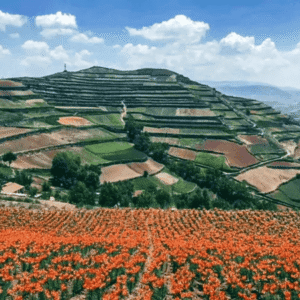
03 Flavor & the “Food-as-Medicine” Tradition: A Quiet Eastern Ritual
Sensory Experience
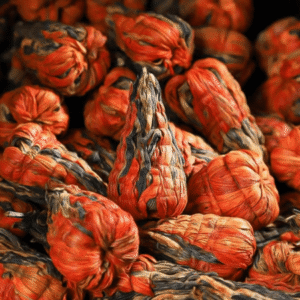
- Appearance (dry): Orange-red to orange-brown petals, elegant form, intact stamens.
- Aroma: A faint, sweet hay-like note when dry; once brewed, it opens into a soft, clean floral fragrance with gentle sweetness.
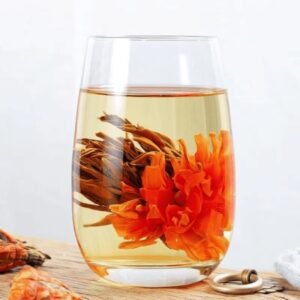
- Liquor: Clear, bright pale gold to light amber.
- Taste: Smooth, lightly sweet on the finish, no harsh bitterness, leaving the mouth feeling refreshed.

An Eastern Cultural Lens: “Food as Daily Balance”
In East Asian food culture, many ingredients are appreciated not only for taste, but also for how they fit into daily life and seasonal habits. Lanzhou lily is often talked about in that spirit.
Common traditional wellness associations (shared here as cultural context):
- A calming, “slow-down” ingredient: Often chosen for moments when people want a gentler, more settled pace.
- A “moistening” feeling in the cup: Frequently linked with clean sweetness and a more comfortable, soothing drinking experience, especially in drier seasons or air-conditioned environments.
- Naturally gentle in profile: It doesn’t dominate; it blends well and keeps the cup feeling light and balanced.
04 Why It Works So Well in Our Lily Pagoda Black Tea: A Balance of Floral and Tea Aroma
What makes Lanzhou lily flowers truly special is that their aroma is never “loud.” It’s refined, restrained, and carries a natural, gentle sweetness. When paired with black tea, the result feels more elevated: the floral note is present without taking over, while the tea remains the main character—cleaner, softer, and with a lingering finish.
That’s exactly why we chose it as a core ingredient in our Lily Pagoda Black Tea. What you taste isn’t a one-note, “perfume-style” floral tea. Instead, it’s closer to the way floral teas are appreciated in East Asian tea culture—flower and tea supporting each other, more wearable on the nose, smoother to drink.
Why the “Pagoda” Shape?
We shape it into a pagoda not just for looks, but to make tea-drinking more visual and ritual-like.
Each piece is hand-arranged and hand-tied with cotton thread—not mass-pressed into a rigid form. The structure helps the tea and flower unfold at their own pace.
And yes, you’ll see a very clear “blooming” moment while brewing: from a compact pagoda into a gradual, graceful opening and expansion in the water. It’s genuinely soothing to watch—especially in a glass cup, where the full unfolding can be seen.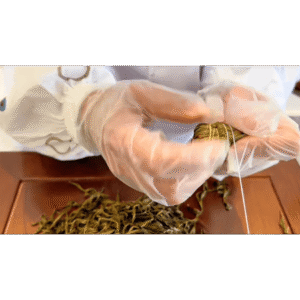
Why We Don’t Produce It in Huge Batches
In China, many people enjoy aged tea—but flowers behave differently. For lily flowers, the best flavor window is typically within one year. Beyond that, the floral character fades noticeably and the layers become duller. Dried flowers can also be more prone to insect issues if storage isn’t ideal.
That’s why we prefer small-batch production on a regular cycle—using fresher flower material and tea base, so what you receive still has the aroma and vitality it’s meant to have.
Why We Use Dianhong as the Tea Base
Because we’re in Yunnan. This region is one of the world’s most renowned tea origins, with ideal conditions for crafting black tea. As a base, Yunnan black tea (Dianhong) has the structure to hold the lily’s elegant aroma steady—without letting the floral note pull the tea off balance.
Dianhong’s advantages (and why it pairs beautifully with lily):
- Fuller aroma: a strong enough tea backbone to stand beside the flower, not compete with it.
- Natural sweetness and roundness: helps the cup feel more unified—clean, smooth, and easy to drink.
- Stable body and good endurance: a supportive base for a structured, “pagoda-style” tea form.
Put together, these elements shape the signature character of our Lily Pagoda Black Tea: floral without being floaty, tea-forward without being heavy—clean, lasting, and deeply satisfying.
05 Brewing Guide: Best for Pagoda-Style Black Tea
Recommended Brewing Method
Amount: 1 piece per cup
Teaware: Glass cup / glass teapot / gaiwan
Water temperature: 90–95°C (194–203°F)
Water amount: About 350–400 ml per piece
Steep: 3–5 minutes (the longer you steep, the stronger it tastes; adjust to your preference)
Re-steep: Refill with hot water 2–3 times (extend the steeping time for each refill if needed)
Best in: clear glass (watch it bloom)
Other Ways to Brew (Optional)
Iced / chilled: Brew hot first for 3–5 minutes, let it cool, then add ice.
Cold brew: 1 piece + ~500 ml cold water. Refrigerate 6–8 hours, then enjoy.
Tip: Prefer a stronger taste? Use less water or a longer steep. Too strong? Add water to dilute.
06 One Flower, Bridging East and the World
Lanzhou lily flowers are more than a pretty ingredient. They carry a story of patience (years of growth), a gift of terroir (altitude and temperature swings), and a quiet Eastern way of living: letting tea and flowers become a moment of steadiness in a noisy day.
Ready to experience this floral-tea ritual?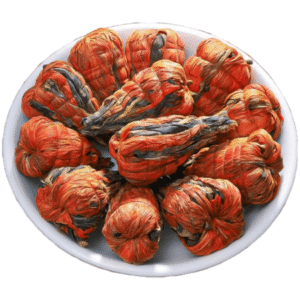
In the comments: when do you most enjoy floral black tea—warm and mellow, or chilled and refreshing? Share your brewing ratio too.
Note
This post is for flavor and cultural education only and is not medical advice. Individual situations vary; if you are pregnant, breastfeeding, taking medication, or have a medical condition, please consult a qualified professional before use.